How to Remove Grout Stains: Professional Solutions by KK Cleaning and Restoration
Introduction: How to Remove Grout Stains
How to Remove Grout Stains: Grout plays a crucial role in holding tile surfaces together and completing the polished look of kitchens, bathrooms, entryways, and commercial floors. Yet despite its importance, grout is often overlooked when it comes to routine maintenance. Over time, it absorbs dirt, grease, soap residue, hard water deposits, and bacteria. The result is darkened, discolored grout lines that make even the most beautiful tile look worn and neglected.
If you have been searching for how to remove grout stains effectively without damaging your tile, you are not alone. Many homeowners struggle with stubborn grout discoloration that resists basic scrubbing and household cleaners. Understanding why grout stains happen and how professionals address them can make a significant difference in restoring your surfaces.
KK Cleaning and Restoration specializes in advanced grout cleaning and restoration services designed to eliminate deep staining while protecting tile integrity. In this comprehensive guide, we will explore everything you need to know about how to remove grout stains, why they occur, and when professional intervention is the best solution.
Understanding Why Grout Stains So Easily
The Porous Nature of Grout
Grout is highly porous. Unlike tile, which often has a sealed or glazed surface, grout contains microscopic pores that absorb liquids and trap contaminants. Every time water, soap, cooking oils, or dirt come into contact with grout, some of that material seeps below the surface.
This porosity is the primary reason homeowners frequently search for how to remove grout stains after noticing darkened lines between their tiles.
Common Sources of Grout Staining
Grout can become discolored from a wide variety of everyday sources:
- Dirt and foot traffic in entryways
- Grease splatter in kitchens
- Soap scum buildup in showers
- Hard water mineral deposits
- Mold and mildew growth
- Cleaning product residue
- Pet accidents
- Food spills
Each type of stain requires a different treatment method, which is why understanding how to remove grout stains properly is so important.
Types of Grout Stains and Their Causes
Dirt and Soil Stains
High-traffic areas accumulate dirt that gets pushed into grout lines. Over time, this leads to gradual darkening.
Mold and Mildew Stains
Bathrooms and showers are especially vulnerable due to moisture. Black or gray staining often indicates mildew growth embedded in grout pores.
Grease and Oil Stains
Kitchen floors and backsplashes frequently suffer from cooking oil splatter. Oils penetrate grout and attract additional dirt.
Hard Water and Mineral Stains
White or chalky buildup is common in areas with hard water. Minerals accumulate and bond to grout surfaces.
Chemical Stains
Improper cleaning products can leave residue or even discolor grout permanently.
Learning how to remove grout stains begins with identifying the type of contamination present.
DIY Methods: When and How to Try Them
Many homeowners first attempt do-it-yourself solutions before calling professionals. While minor surface stains can sometimes be addressed with household methods, deeper staining often requires specialized equipment.
Baking Soda and Vinegar
A popular home remedy involves applying baking soda paste followed by vinegar. This creates a foaming reaction that can lift light surface stains. However, acidic solutions should be used cautiously, as repeated exposure may weaken grout over time.
Hydrogen Peroxide
Hydrogen peroxide may help lighten mild discoloration and kill surface bacteria. It is often used for bathroom grout.
Commercial Grout Cleaners
Store-bought products can be effective for light staining but may contain harsh chemicals. Repeated use may degrade grout integrity.
If these methods fail, professional expertise becomes essential for truly understanding how to remove grout stains without causing damage.

Why DIY Methods Often Fall Short
Surface-Level Cleaning
Most household cleaning attempts address only surface discoloration. Stains embedded deep within grout pores remain untouched.
Inconsistent Results
Manual scrubbing can produce uneven results, leaving some areas cleaner than others.
Risk of Damage
Using stiff brushes or harsh chemicals can erode grout lines, leading to cracking and water infiltration.
Understanding how to remove grout stains safely means recognizing the limitations of home remedies.
Professional Techniques for Removing Grout Stains
KK Cleaning and Restoration uses advanced equipment and cleaning solutions specifically designed for grout restoration.
Detailed Inspection
Every project begins with evaluating:
- Tile material
- Grout condition
- Type of staining
- Extent of discoloration
- Previous cleaning attempts
This assessment ensures the most effective approach.
Pre-Treatment Application
Specialized cleaning agents are applied to break down oils, bacteria, and mineral buildup. These formulations penetrate grout pores without compromising structural integrity.
Agitation and Deep Cleaning
Professional tools gently agitate grout lines to loosen embedded contaminants.
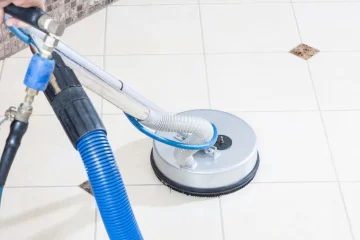
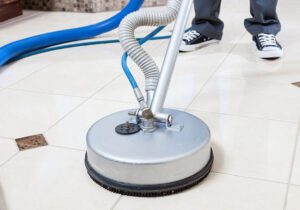
High-Temperature Extraction
Controlled hot water pressure combined with extraction removes loosened debris from deep within grout. This process is significantly more effective than manual scrubbing.
Grout Sealing
After cleaning, applying a protective sealer helps prevent future staining. Sealing is a critical step when considering how to remove grout stains and keep them from returning.
Kitchen Grout Stain Removal
Kitchen grout is exposed to grease, food particles, and heavy foot traffic.
Common Kitchen Stains
- Oil splatter
- Sauce spills
- Beverage stains
- Dirt tracked from outdoors
Professional cleaning restores grout brightness and improves overall kitchen appearance.
Bathroom Grout Stain Removal
Bathrooms face unique challenges due to humidity and soap residue.
Soap Scum Buildup
Soap combines with minerals in water to form stubborn residue that bonds to grout.
Mildew Growth
Dark staining in showers is often caused by fungal growth beneath the surface.
Knowing how to remove grout stains in bathrooms often requires mold-targeted cleaning solutions.
High-Traffic Floor Grout Restoration
Entryways, hallways, and commercial spaces experience heavy use.
Professional equipment ensures uniform cleaning across large areas, restoring consistent color throughout.
The Importance of Grout Sealing
Why Seal Grout?
Sealer creates a protective barrier that reduces moisture absorption and staining.
Benefits of Sealing
- Easier routine cleaning
- Reduced mold growth
- Extended grout lifespan
- Improved stain resistance
When learning how to remove grout stains, sealing is a preventative measure that protects your investment.
Preventing Future Grout Stains
Regular Maintenance
- Sweep or vacuum frequently
- Mop with pH-neutral cleaners
- Wipe up spills immediately
Improve Ventilation
Reducing humidity in bathrooms prevents mold-related staining.
Use Door Mats
Entryway mats reduce dirt transfer to grout lines.
Understanding how to remove grout stains is only half the solution—prevention ensures long-lasting results.
When Grout Replacement Is Necessary
In severe cases where grout has deteriorated or cracked, cleaning alone may not restore its appearance.
Signs Replacement May Be Needed
- Crumbling grout
- Deep cracks
- Permanent discoloration
- Water damage beneath tiles
KK Cleaning and Restoration evaluates whether cleaning or regrouting is the best solution.
Commercial Grout Cleaning Solutions
Businesses rely on clean floors to maintain professional appearances.
Restaurants, offices, and retail spaces benefit from regular professional maintenance to address high traffic and spills.
Environmental Considerations
Professional cleaning reduces the need for harsh chemical overuse and extends tile lifespan, minimizing waste.
The Cost-Effective Alternative to Replacement
Replacing tile is expensive and disruptive. Professional cleaning offers a fraction of the cost while dramatically improving appearance.
Learning how to remove grout stains professionally can save thousands in renovation expenses.
Why Choose KK Cleaning and Restoration
KK Cleaning and Restoration combines expertise, advanced equipment, and proven cleaning systems to deliver consistent results.
Clients value:
- Thorough inspections
- Safe cleaning formulations
- Powerful extraction systems
- Attention to detail
- Long-term stain prevention strategies
Transforming Your Space
Clean grout lines brighten entire rooms. Kitchens appear newer, bathrooms feel fresher, and floors regain their original vibrancy.
Understanding how to remove grout stains properly can dramatically enhance the look and feel of your home or commercial property.
Final Thoughts
Grout stains are common but not permanent. With the right approach, even deeply embedded discoloration can be removed safely and effectively. While DIY attempts may offer temporary improvement, professional cleaning provides lasting results.
If you have been wondering how to remove grout stains without damaging your tile, expert restoration is often the most reliable solution. KK Cleaning and Restoration delivers professional-grade cleaning, protective sealing, and preventative guidance to help maintain beautiful, stain-free grout for years to come.
Clean grout is more than a cosmetic upgrade—it is a sign of proper care, hygiene, and pride in your space.
Contact us now:
 Call us now at +16479163093
 Email: info@kkcleaningandrestoration.ca
 Visit: https://kkcleaningandrestoration.ca/
Faqs on How to Remove Grout Stains by KK cleaning and restoration:-
1. What causes grout stains to develop over time?
Grout stains develop because grout is naturally porous and absorbs liquids, dirt, and contaminants. Every time water, soap, oil, or debris contacts grout lines, some of it penetrates below the surface. Over time, this buildup leads to visible discoloration. High-traffic areas collect soil that gets ground into grout pores. Without proper sealing and maintenance, staining becomes more severe and difficult to remove.
2. Why does grout darken even when I mop regularly?
Mopping often spreads dirty water across the floor rather than extracting it. The mop water can settle into grout lines and leave residue behind. As it dries, dirt particles remain embedded in the pores. Repeated mopping without deep cleaning can gradually darken grout. Professional extraction methods remove debris instead of redistributing it.
3. Can baking soda remove grout stains effectively?
Baking soda can help with light surface stains by acting as a mild abrasive. When mixed into a paste, it can lift some dirt from the top layer of grout. However, it does not penetrate deeply enough for embedded staining. Heavy discoloration usually remains after treatment. It works best as a maintenance solution rather than a full restoration method.
4. Is vinegar safe to use on grout?
Vinegar is acidic and can break down mineral deposits. While it may temporarily lighten some stains, repeated use can weaken grout structure. Acid exposure can cause erosion and make grout more porous over time. This may lead to faster staining in the future. It should be used cautiously and sparingly.
5. What is the best way to remove grease stains from grout?
Grease stains require a degreasing solution that breaks down oil molecules. Standard cleaners often fail because oil bonds strongly to porous surfaces. Professional-grade alkaline cleaners are typically more effective. Agitation combined with extraction removes loosened residue. Sealing afterward helps prevent future grease penetration.
6. Why do grout stains return after cleaning?
Stains often return when only surface cleaning is performed. Embedded contaminants remain within grout pores and resurface over time. Inadequate drying and high humidity also contribute to recurrence. Without sealing, grout continues to absorb moisture and dirt. Deep cleaning followed by sealing provides longer-lasting results.
7. Can steam cleaning remove grout stains?
Steam cleaning can help loosen dirt and bacteria from grout lines. However, steam alone may not extract all embedded contaminants. Without proper vacuum extraction, loosened debris may settle back into the pores. For severe staining, professional equipment with pressure and extraction is more effective. Steam is often part of a broader cleaning process.
8. Are commercial grout cleaners better than home remedies?
Commercial cleaners are formulated specifically for grout and may provide stronger results. However, not all products are safe for every tile type. Some contain harsh chemicals that can damage grout over time. Effectiveness varies depending on the severity of staining. Professional assessment ensures the safest and most effective solution.
9. How do mold stains differ from dirt stains in grout?
Mold stains are caused by fungal growth and often appear black or dark gray. Dirt stains result from soil and debris accumulation. Mold requires antimicrobial treatment to eliminate spores. Dirt stains typically respond to deep cleaning and extraction. Identifying the stain type ensures proper treatment.
10. Is hydrogen peroxide safe for grout cleaning?
Hydrogen peroxide can help lighten mild discoloration and kill bacteria. It is generally safer than acidic cleaners. However, it may not remove deeply embedded stains. Excessive use can slightly bleach colored grout. Testing in a small area first is recommended.
11. How can I tell if grout needs professional cleaning?
If grout remains dark after thorough scrubbing, professional cleaning may be necessary. Persistent discoloration indicates deep contamination. Musty odors can also signal embedded mold. Uneven color between grout lines suggests uneven soil buildup. Professional evaluation can determine the appropriate treatment.
12. Can grout stains be permanent?
Some stains can become permanent if grout is severely damaged or chemically altered. Long-term neglect increases this risk. In such cases, recoloring or regrouting may be required. Most stains, however, can be significantly improved with professional cleaning. Early intervention increases the chance of full restoration.
13. Does sealing grout prevent staining?
Sealing reduces grout’s ability to absorb liquids and dirt. It creates a protective barrier that slows down staining. While it does not make grout completely waterproof, it significantly improves resistance. Regular resealing maintains effectiveness. Sealed grout is easier to clean and maintain.
14. How often should grout be sealed?
Grout should typically be sealed every one to three years. The frequency depends on traffic levels and moisture exposure. Kitchens and bathrooms may require more frequent sealing. Regular inspection helps determine when resealing is necessary. Maintaining the seal extends grout lifespan.
15. Why does shower grout stain more quickly?
Showers are constantly exposed to moisture and soap residue. Steam creates humid conditions ideal for mold growth. Soap scum bonds with minerals and dirt, forming stubborn buildup. Poor ventilation accelerates staining. Regular drying and sealing help reduce this problem.
16. Can colored grout fade during cleaning?
Aggressive scrubbing or harsh chemicals may lighten colored grout. Professional cleaners use controlled methods to preserve pigment. Testing products before full application is important. In cases of fading, grout recoloring is an option. Proper cleaning should enhance rather than diminish color.
17. What tools are best for scrubbing grout?
Soft-bristle brushes are ideal for light cleaning. Stiff brushes may damage grout if used aggressively. Manual scrubbing is often insufficient for deep stains. Professional equipment uses mechanical agitation safely. Tool selection should match grout condition.
18. Does hard water cause grout staining?
Yes, hard water leaves mineral deposits that bond to grout. Over time, these deposits appear white or chalky. Mineral buildup can also trap dirt particles. Acidic cleaners may remove surface deposits but risk grout damage. Professional cleaning balances effectiveness with safety.
19. How long does professional grout cleaning take?
Most residential jobs take one to three hours. Larger areas or severe staining may require additional time. The process includes inspection, treatment, cleaning, and drying. Results are often visible immediately. Drying time varies based on ventilation.
20. Is grout cleaning messy?
Professional systems include extraction to minimize splashing. Surrounding surfaces are protected during service. Water usage is controlled to prevent oversaturation. After cleaning, surfaces are left only slightly damp. Proper technique ensures minimal disruption.
21. What is the most effective long-term solution for grout stains?
The most effective solution combines deep professional cleaning with proper sealing. Removing embedded contaminants restores original color and brightness. Sealing prevents rapid reabsorption of dirt and moisture. Routine maintenance keeps grout in optimal condition. Together, these steps ensure long-lasting, stain-free grout surfaces.
Contact us now:
Call us now at +16479163093
Email: info@kkcleaningandrestoration.ca
Visit: https://kkcleaningandrestoration.ca/