Best Ways to Clean Tile Grout: A Complete Guide to Deep and Effective Grout Cleaning
Best Ways to Clean Tile Grout: There are more effective methods of cleaning tile grout than just spraying a household cleaner and scrubbing until the surface is brighter. Grout is usually more porous than the tile around it, allowing moisture, dirt, soap residue, body oils, food particles and other contaminants to penetrate it. These substances can, over time, turn grout grey, yellow, brown or black, even if the tile itself is relatively clean.
The first step to effective grout cleaning is to determine the type of grout, the tile type and the type of buildup on the tile surface. Dirt is not the same as soap scum, grease, hard water deposits, mold, or deeply embedded staining. The wrong product or too aggressive of a cleaning technique can actually harm grout rather than helping it.
Proper preparation, use of an appropriate cleaning solution, adequate contact time, controlled agitation, adequate rinsing and complete drying are the best ways to clean tile grout. Professional tile and grout cleaning can offer a more thorough and controlled restoration process for severely neglected surfaces.
KK Cleaning and Restoration offers tile and grout cleaning, grout sealing, regrouting, shower restoration and cleaning services. Professional cleaning can be particularly useful when standard household cleaning doesn’t seem to be working.
Reason for tile grout getting dirty and stained
Grout is continually exposed to substances that can settle into its porous structure, making it dirty. These substances are typically found on bathroom floors and shower walls and consist of soap, shampoo, body oils, mineral deposits, moisture, dirt and organic residue. Grout can soak up food particles, grease, spills, and cooking residue in kitchens.
The microscopic pores in cement-based grout can trap contaminants, and this is especially true of grout. The grout can slowly darken and become harder to clean as the surrounding tile stays relatively easy to clean.
Moisture can exacerbate the issue. When grout is wet, it can collect dirt and provide an environment conducive to mold and mildew stains, especially in bathrooms that lack adequate ventilation.
The condition and age of the grout also play a role. Old grout can be stained or rough, cracked, or weakened. In those cases, more scrubbing doesn’t necessarily lead to better results.
First, it is essential to know the reasons for the dirtiness of grout, in order to select the most effective methods of cleaning tile grout without causing any damage.
Before cleaning, identify Your Tile and Grout
Before selecting a cleaner, determine the materials to be cleaned. Most ceramic and porcelain tiles will be resistant to the aggressive chemicals, but the grout around them may not be.
Natural stone needs extra maintenance. Some types of stone surfaces, such as marble, limestone, travertine, and others, may be adversely affected by acidic cleaners and abrasive techniques. A product that is safe for ceramic tile can be permanent stains or damage to some natural stone surfaces.
The type of grout is also significant. Cementitious grout is porous and reacts differently than epoxy grout, which is much less porous and is less susceptible to staining.
If the type of grout is unknown, don’t try more and more aggressive products. To see how the surface reacts, a small inconspicuous area can be tested to see if the cleaner is suitable for the installation before treating the whole installation.
The best ways to clean tile grout are always material-specific. The objective is to clean without damaging the grout, tile finish, colour and adjacent surfaces.
Clean the tile surface prior to deep cleaning
Grout cleaning is much more effective when prepared. Before applying a wet cleaning solution, loose dirt should be removed, otherwise the cleaner may just be adding more dirt to the mud.
Sweep or vacuum the floor surface well for floors. Use a suitable dry or slightly damp cloth to remove loose dust and surface dirt from walls, showers and backsplashes.
Clear furniture, rugs, bathroom items, shampoo bottles, soap dishes and other items that may hinder cleaning. Clear sections enable more uniform treatment of the grout.
Ventilation is particularly important when cleaning bathrooms. Open windows and use exhaust fan if available, particularly when using commercial cleaning products.
Before starting it’s also helpful to check the grout. If there are cracks, crumbling joints, missing grout, loose tiles or deteriorated silicone, it may be a problem that needs to be restored, not just cleaned.
Choose the Right Grout Cleaner
One of the most crucial aspects of the best ways to clean tile grout is the selection of the cleaning solution. Many cement based grout cleaning applications are suitable for a suitable neutral or alkaline cleaner.
Acidic cleaners should be used with caution as acids can react with cement-based grout. According to the Tile Council of North America, acids can damage cement in grout, and alkaline cleaning methods are suggested for regular grout cleaning.
Do not use oil or wax based products on porous grout as they will form a film that will attract dirt. Even a good cleaner can cause problems if it is not rinsed after use.
For heavy tile and grout buildup, specialized tile and grout cleaners might be more suitable since they are designed specifically for tile and grout. Always follow manufacturer’s directions and ensure that the product is compatible with tile and grout.
The strongest chemical is not necessarily the most effective solution. The right cleaner, with the right dwell time and agitation can often beat the needless aggressive cleaner.
Avoid over scrubbing, use Contact Time
The most frequent grout-cleaning error is to scrub the surface right after applying cleaner. The solution has a recommended contact time; leaving it on the grout for that time will allow it to soften dirt and buildup.
Contact time is the time the cleaning solution is in contact with the surface before mechanical action is applied. This can help to save a lot of force to clean the grout.
Clean in small sections to prevent the cleaning solution from drying out too soon. Spread evenly over the grout lines and let it do its job as directed on the label.
Once the proper dwell time, start controlled agitation with a proper grout brush. Do not leave the cleaning solution on surfaces for longer than recommended.
Effectively using contact time is one of the easiest best ways to clean tile grout without unnecessary physical wear.
Use the proper tools to clean grout
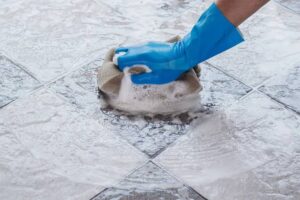
One of the best tools for cleaning grout is a suitable grout brush. If the grout surface is not to be damaged, nylon or other non-metallic bristles can provide sufficient agitation to remove embedded dirt.
For small grout joints, strokes must be controlled and not too forceful. Clean around grout lines and focus on areas where dirt is visibly present.
Do not use metal brushes or too abrasive pads unless a professional says it is OK. Aggressive tools may cause scratches to tile finishes or grout material to be removed.
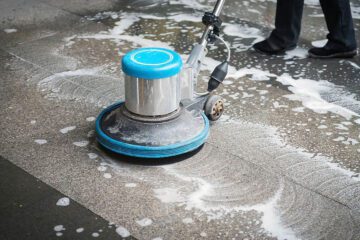
If the floor area is large, then mechanical cleaning equipment can be used to make the process faster and more consistent. Professional cleaners can also use equipment that can agitate grout while limiting the amount of water and cleaning solution used.
The goal is to eliminate the contamination, not the grout. If the grout starts to crumble while cleaning, it is an indication that the condition of the grout needs to be evaluated before further cleaning.
The Way to Clean Grout With Everyday Dirt and Grime
Typical dirt will not need as strong of a treatment as staining that has been built up over the years. Start by cleaning off loose debris and use a suitable grout-safe cleaner.
Let the cleaner do his job and then lightly brush the grout lines with an appropriate brush. Pay attention to the high traffic zones, corners, transitions and other areas where dirt is likely to settle.
Rinse well with clean water after agitation. Leaving cleaning residue can form a sticky film that will collect more dirt and can cause the grout to look dirty again.
Use a clean microfiber towel or other suitable method to dry the surface. In bathrooms, where moisture can get caught in grout, it is particularly crucial to ensure complete drying.
It’s easier to keep up with regular maintenance than to scrub away years of grime. Therefore, one of the best ways to clean tile grout in the long run is to clean it frequently with light cleaning.

Clean away Soap Scum, Grease and Heavy Buildup
Bathroom grout can accumulate a layer of soap scum, shampoo residue, body oils, and dirt. Instead, grease and food debris can build up in kitchen grout.
These pollutants can form a layer on the grout that will not allow regular water to adequately clean the surface. This type of buildup can be removed with a suitable alkaline or specialty cleaner.
Apply evenly and leave on for adequate contact time before scrubbing. Work in small sections to ensure that the solution is effective during agitation.
Rinse off as many times as needed after cleaning. Thorough rinsing is important because any grease, soap residue or cleaning solution that has been loosened should not be allowed to dry back on the grout.
Professional tile and grout cleaning can offer specialized cleaning solutions, agitation and water extraction to remove contamination more efficiently for extensive buildup.
Clean up mold, mildew and dark grout
Not all dark grout is a sign of mold. It may be due to normal dirt, soap scum, mineral deposits, permanent staining, or actual mold and mildew growth.
Moisture management is an important aspect of cleaning if there is a suspicion of mold. If the bathroom is humid and damp for too long, mold can reappear even after it is cleaned.
Do not combine cleaning chemicals. Never mix bleach with acids or other incompatible products as harmful fumes or chemical reactions may result.
If the contamination is on a suitable surface, and the area is small, carefully remove the contamination with a suitable method and dry the area thoroughly. If the mold is larger or if it is a recurring issue, it may need to be professionally assessed and remediated.
The most effective methods for cleaning tile grout should focus on the source of the tile grout discoloration instead of using more powerful chemicals repeatedly on the same tile grout surface.
Clean hard water deposits and mineral build-up
As water evaporates from the tile and grout, hard water can cause mineral deposits to form. These deposits can be white, cloudy, grey or chalky and can give the impression that the grout is not being cared for.
The removal of mineral deposits can be particularly challenging as the correct treatment will depend on the type of deposit and the material being cleaned. Acidic products can be effective against some mineral deposits but may damage cement grout or natural stone.
Therefore, it is important for homeowners to not take it for granted that any descaling product is safe for all tile installations. Special attention must be paid to natural stone surfaces.
Professional cleaning can be beneficial if mineral deposits are large or if the material is sensitive. A professional will be able to decide if a special cleaning, mechanical agitation or other treatment is necessary.
After mineral removal, minimizing standing water and regular surface maintenance will help slow the re-accumulation of minerals.
Rinse, extract and dry the grout thoroughly
Rinsing is a crucial part of the process to clean grout effectively. The goal is to wash away dirt, cleaning chemicals, soap residue and contaminated water from the surface.
Water rinsing and water extraction are effective methods recommended by the Tile Council of North America, as contaminated water may otherwise be left around grout joints. Professional cleaning equipment can extract more than the normal wiping or mopping.
Rinse and check grout for any residue. More rinsing may be required if the surface is heavily contaminated or if a large amount of cleaning product has been applied.
Dry surface completely after. This is particularly crucial in bathrooms, as moist grout can lead to frequent moisture issues.
If the surface is properly rinsed and dried, you will have a much better idea of the condition of the grout. It also produces appropriate grout for possible sealing.
Seal Clean Grout for Better Long-Term Protection
After the grout has been cleaned and completely dried, appropriate cement-based grout can be sealed. Some stains may be easier to handle if a penetrating sealer is used to help minimize absorption.
Sealing does not clean. Grout that is dirty or wet should not be sealed as it will affect the outcome.
The Tile Council of North America states that sealing cementitious grout will help to preserve the porous surface. The type of sealer used will vary based on the grout, tile installation, exposure and performance desired.
Even after sealing, regular maintenance is required. Even soap, dirt, grease and minerals can build up on the surface.
If you are a homeowner seeking the best methods for cleaning tile grout, then you should consider doing a deep clean every once in a while and then seal and maintain it properly for much better long-term results than doing deep cleaning every few years and then scrubbing it with a lot of force.
Professional tile and grout cleaning is best when
Cleaning by hand may work for light and moderate buildup, but if the grout is very neglected, it may need professional cleaning. Household products may not be effective in removing dirt, soap scum, mineral deposits, staining and moisture-related discoloration that may have been built up over the years.
Professional cleaning can offer specialized cleaning solutions, controlled agitation, steam or other appropriate equipment, and water extraction. These techniques can be used to restore grout without the need for too much hand scrubbing.
Professional service is also beneficial if the tile or grout material is unknown. Appropriate products are essential to avoid damaging natural stone and specialty surfaces, so professional assessment is especially critical.
If the grout is cracked, missing, crumbling or badly damaged, cleaning might not be enough. Regrouting can provide a more appropriate solution in those situations.
KK Cleaning and Restoration can assess the state of the tile and grout and decide if it can be cleaned and sealed, or if it needs to be regrouted or restored.
Professional Tile and Grout Cleaning Services from KK Cleaning and Restoration
Cleaning tile grout is best done by getting a really clean surface without harming the tile or grout. Good preparation, material identification, correct cleaning materials, contact time, controlled brushing, rinsing, extraction and complete drying all help to achieve better results.
KK Cleaning and Restoration offers professional tile and grout cleaning for residential and commercial surfaces that have been stained, soiled, left with soap residue, mineral deposits, and general wear. Professional cleaning can help to restore the shine to dull or heavily soiled grout and can also help to uncover issues that regular cleaning may overlook.
Grout sealing can be used to give extra protection after cleaning, if appropriate. When grout is too far gone to be restored, regrouting may be a more viable option in the long run.
Shower surfaces can also need caulk replacement or shower restoration if silicone is damaged, moisture issues or worn joints cause contamination to occur again.
In the end, it’s a combination of deep cleaning and regular maintenance that keeps grout clean. Clear up spills and residue quickly, ventilate bathrooms, minimize standing water, clean high-traffic areas often, and fix broken grout before it gets worse.
Homeowners can keep their tile and grout cleaner and brighter, and prolong the useful life and beauty of their tiled surfaces with the proper cleaning technique and professional help if needed.
Contact us now:
📞 Call us now at +16479163093
📧 Email: info@kkcleaningandrestoration.ca
🌐 Visit: https://kkcleaningandrestoration.ca/
Faqs on Best Ways to Clean Tile Grout:-
1. What are the best ways to clean tile grout?
The most effective methods for cleaning tile grout are to first determine the type of grout and tile material before choosing a cleaning solution. Many cement-based grouts can be cleaned with a proper alkaline cleaner and controlled brushing to remove dirt, soap residue and stains. Afterwards, the grout should be well cleaned to prevent the buildup of cleaning residue that can attract more dirt. Professional tile and grout cleaning may be necessary for very dirty surfaces for deeper cleaning and water removal.
2. What is the Best Way to Deep Clean Tile Grout?
Regular light cleaning and maintenance should be done on tile grout and deep cleaning should be performed when normal cleaning does not restore its appearance. Bathrooms and kitchens tend to need more frequent cleaning as they are exposed to moisture, soap, grease, food residue, and other contaminants. The correct frequency also relies on the amount of foot traffic, the ventilation, the quality of the water, and if the grout has been sealed. When buildup is hard to control with regular maintenance, professional tile and grout cleaning can be scheduled on a regular basis.
3. What Is the Best Cleaner for Tile Grout?
The type of grout, tile and contamination on the surface will determine the best cleaner. For many cementitious grouts, an alkaline cleaner is better than an acidic cleaner since acids can damage cement. For heavier soil, grease, soap scum and staining, specialty tile and grout cleaners may be helpful if they are compatible with the surface. Always use the cleaner as directed by the manufacturer and test any new cleaner in an inconspicuous area first.
4. Is it possible to use vinegar for cleaning tile grout?
Vinegar may not be one of the best methods to clean tile grout, especially if the grout is cement based. Acids can harm cement and repeated exposure to acidic cleaners can cause damage to the grout surface over time. Vinegar may also not be appropriate for acid-sensitive natural stone surfaces like marble, limestone, and certain travertine surfaces. For regular grout cleaning, it is better to use a compatible alkaline cleaner or a manufacturer-recommended cleaner.
6. Can Baking Soda be used for cleaning grout?
When used properly on compatible tile and grout, baking soda can offer mild abrasive properties and may be helpful for light surface dirt. But it’s not the answer to all grout staining, greasing, mold and extreme neglect. Over scrubbing can cause the weakened grout to wear away, particularly with the use of abrasive materials over and over. Professional tile and grout cleaning can be more effective in cases of persistent contamination, while minimizing the risk of damaging the grout.
7. How to Clean White Tile Grout?
The first step in cleaning tile grout that has stained or discoloured is to determine if the issue is dirt, soap residue, mineral deposits, mold or permanent staining. Use an appropriate grout cleaner, follow the directions for use and lightly brush the grout with a nylon or other suitable brush. After cleaning, rinse with clean water and dry thoroughly. When the grout can’t be cleaned, and continues to stain, it may be better to attempt professional restoration or regrouting than more and more aggressive chemical treatments.
8. How to Clean Grout Lines of Soap Film?
The soap scum can be eliminated with a proper cleaner that is able to dissolve the mixture of soap, body oils, shampoo residue and dirt that has built up on the grout. If the cleaner is given the proper contact time before brushing, less force may be required to loosen the buildup. Rinse thoroughly with clean water after agitation, to remove both the loosened residue and the cleaning solution. Professional shower tile and grout cleaning can be especially beneficial if soap scum has been ingrained in the tile and grout over the years.
9. How to Remove Grease from Kitchen Grout?
Typical kitchen grout is greasy and will generally need a cleaner that can remove oils and food debris without harming the grout or tile. Treat small areas and let contact time elapse before lightly scrubbing the joints with the proper product. The dirty solution should then be removed and not left to dry back onto the floor or backsplash. Rinsing is important as any detergent residue left behind will form a film that will attract dirt.
10. What Tools to Use for Cleaning Tile Grout?
One of the most useful tools is a nylon grout brush, which can be used to agitate recessed grout joints without causing too much abrasion like some metal grout brushes. Microfiber cloths may be helpful for cleaning tile surfaces, for removing residue and for drying the surface after cleaning. In larger areas, professional equipment can be used for controlled agitation and extraction that is not possible with household equipment. Cleaning tile grout is all about the right tools and techniques, not just the pressure.
10. Do I need to scrub the grout as hard as I can?
No, too much pressure is not needed and can cause damage to already weakened or deteriorated grout. The cleaning solution should be provided to loosen the contamination prior to the controlled agitation. For most applications of grout cleaning, nylon or plastic scrubbers are better than heavy metal brushes. If the grout starts to crumble or leak out of the joints when being cleaned, it may need to be repaired or regrouted, not simply scrubbed again.
11. What is the recommended time for the grout cleaner to sit before scrubbing?
The correct contact time will vary depending on the cleaning product and the type of contamination. There are some professional grout cleaners that are formulated to sit on the surface for a few minutes before being agitated so that the soil is loosened to be removed. Always follow the product label, not assuming that longer contact will be more effective. It is also important to prevent the cleaner from drying on the surface during the cleaning process.
12. Why is it important to rinse after cleaning grout?
Rinsing will wash away loose dirt, cleaning chemicals, soap residue and contaminated water from the surface of the grout. When cleaning residue is left behind, it can create a sticky film that will trap more dirt and make the grout or tile look dull. Rinse water must be fresh and clean, not just dirty water being thrown on a clean surface. Rinsing is therefore one of the most effective best ways to clean tile grout.
13. Can Steam Cleaning Clean Tile Grout?
For some grout-cleaning applications, steam can be beneficial because the heat and pressure may be able to dislodge some types of embedded contamination. Steam, however, is not appropriate for all tiles, grouts, sealers or installation conditions. Grout should be inspected prior to use of high pressure or high temperature equipment, particularly if joints are already degraded. Professional cleaners can decide which method of cleaning is best for the surface.
14. How to get rid of mold on tile grout?
If the grout is discolored due to mold, it’s not enough to just make it look lighter; the moisture conditions that cause the mold to grow must be addressed as well. If the surface is suitable, the affected surface should be cleaned carefully with an appropriate method and then dried thoroughly. Other areas that should be checked are bathroom ventilation, standing water, damaged caulking, leaks, and persistent humidity. When mold keeps coming back and covers a large area, it may be a good idea to have it professionally assessed and shower tile and grout cleaned.
15. How to Get Rid of Hard Water Stains on Grout?
Mineral deposits may cause a white, cloudy, grey or chalky look on tile and grout as hard-water deposits leave behind mineral residue. The type of deposit and material will determine the type of cleaning method to use as some acidic descaling products will harm cement based grout or natural stone. Don’t use more powerful chemicals just because the deposit is hard to remove. Mineral buildup can be extensive or the tile material may need special treatment, in which case professional tile and grout cleaning can be beneficial.
16. Does Professional Tile and Grout Cleaning Get Rid of Deep Stains?
When the grout is structurally sound, professional cleaning can help to clean up a lot of the dirt, soap scum, grease, mineral residue and other removable contamination. Professional techniques can use the right cleaning products, the proper agitation, rinsing and water extraction. But if the grout is permanently stained or is in very poor condition, it may not be restored by cleaning. If cleaning is no longer possible, regrouting might be a more effective long-term solution.
17. Do you need to seal Tile Grout after cleaning?
If the surface is well cleaned and completely dry, it may be suitable to seal with suitable cement-based grout. A penetrating sealer may help minimize absorption and offer extra protection against some stains and moisture contamination. Sealing does not mean that the surface will not accumulate dirt and residue and that it doesn’t need to be cleaned regularly. According to the Tile Council of North America, sealing is generally good for cementitious grout, but epoxy grout generally has a lower porosity.
19. Can Oil-Based Cleaners be used on tile grout?
Oil- and wax-based cleaners are not recommended for porous cement-based grout as they can leave an oily or waxy film in the grout. That leftover can collect dirt and cause the grout to look dirty again sooner. An otherwise good alkaline cleaner can cause trouble if it is not thoroughly rinsed off after application. One of the most crucial best ways to clean tile grout is to select a residue-free, compatible cleaner.
20. When is it time to replace Tile Grout instead of cleaning it?
Cracks, crumbling, missing, severely deteriorated grout, or grout that cannot adequately perform its joint filling function should be considered for replacement. Cleaning will eliminate contamination, but not restore failed grout. If the deep cleaning only yields partial results, due to staining that is permanent or the grout is broken down, regrouting might be a better option. A professional inspection will be able to identify if cleaning, restoration or regrouting is the best solution.
20. What are the ways to keep grout clean after professional cleaning?
The easiest way to prolong the results of professional tile and grout cleaning is to maintain the light regularly. Prevent spills, soap residue and dirt from getting into porous grout. Minimizing standing water and proper ventilation in bathrooms can help prevent moisture buildup. For suitable cement-based grout, additional protection can be achieved by periodic deep cleaning and appropriate grout sealing.
21. What are the worst things people do when cleaning grout?
Common errors are the use of inappropriate acidic cleaners, scrubbing too much, allowing cleaners to dry, not rinsing thoroughly, and using abrasive tools that can cause damage to grout or tile. The other error is assuming that all types of tile and grout are the same and therefore require the same cleaning methods. Attempting to use increasingly strong chemicals without determining the cause of the staining can exacerbate the problem. Material compatibility, controlled cleaning, proper rinsing, and knowing when to call in the professionals are the most important aspects of cleaning tile grout.
22. Why Choose KK Cleaning and Restoration for Tile Grout Cleaning?
KK Cleaning and Restoration offers professional tile and grout cleaning for surfaces that are soiled by dirt, soap residue, grease, mineral deposits, staining, and normal wear. Professional cleaning can offer more controlled agitation and extraction, and can help to determine if the grout is appropriate for cleaning or if it needs to be sealed, restored, or regrouted. For showers and bathrooms, related services like grout sealing, regrouting, caulking and shower restoration can solve problems that regular cleaning can’t. Professional tile and grout cleaning can be especially beneficial if grout is very soiled, hard to clean, or if it is prone to recurring moisture and staining.
Contact us now:
📞 Call us now at +16479163093
📧 Email: info@kkcleaningandrestoration.ca
🌐 Visit: https://kkcleaningandrestoration.ca/