If you have stepped into your bathroom recently and noticed a persistent reddish-orange film creeping across your shower grout lines and caulking seams, you are not alone. Across Toronto, Mississauga, Scarborough, Etobicoke, and Vaughan, thousands of homeowners struggle with this exact bathroom discolouration.
Many homeowners worry that this orange residue indicates corroding municipal water pipes or dangerous black mold. In scientific reality, it is a resilient airborne bacterium named Serratia marcescens. Left untreated, it penetrates porous cementitious grout, breaks down perimeter sealants, and risks long-term water damage behind tile walls.

What Exactly Is That Pink and Orange Slime on Your Shower Grout?
Serratia marcescens is a rod-shaped, Gram-negative bacterium commonly present in soil, outdoor dust, and tap water. In human dwellings, it seeks warm, damp wet zones with high ambient moisture—such as showers, bathtubs, and vanity surrounds. At typical room temperatures (20°C to 25°C), the bacterium synthesizes prodigiosin, a dark reddish-orange pigment that leaves vivid streaks across porous grout lines.
Unlike fungal mold, which feeds on organic cellulose like drywall and subfloor wood, Serratia marcescens survives on fatty acids, lipids, and phosphorus. In everyday shower routines, bar soaps (sodium tallowate), hair shampoos, and body washes deposit microscopic fatty residues into unsealed grout pores, serving as an uninterrupted nutrient source for bacterial colonies.
5 Proven Reasons Why Toronto Showers Suffer Discoloration
- Lake Ontario Ambient Humidity: High summer humidity levels across Southern Ontario regularly exceed 70%, preventing shower enclosures from drying completely between uses.
- Peel & York Region Water Hardness: Dissolved calcium carbonate and magnesium in local tap water bond with soap scum, forming a hard mineral crust that insulates bacterial biofilms against light wiping.
- Condominium Ventilation Restrictions: Many Toronto high-rise condos feature shared ductwork with reduced airflow, leaving humidity trapped for hours.
- Unsealed Porous Grout Lines: Standard cementitious grout absorbs up to 18% moisture by volume when left unsealed, trapping moisture and bacteria beneath the surface.
- Failing Silicone Seams: Degraded acrylic caulking along shower pans shrinks and creates microscopic gaps where colonies multiply undisturbed.

Why Bleach and Acidic Cleaners Damage Your Shower Grout
When orange discoloration appears, reaching for chlorine bleach or acidic descalers is the most common homeowner mistake:
- Bleach Only Conceals the Surface: Household bleach acts as an optical oxidizer, bleaching the reddish pigment so the biofilm appears clear. However, it fails to penetrate past the top 0.5mm layer. Within 4 to 7 days, surviving bacteria reproduce and the orange streaks reappear. Furthermore, the Health Canada air quality guidelines warn against hazardous chemical off-gassing in enclosed bathroom spaces.
- Water Content Feeds the Colony: Store-bought bleach is over 90% water. Once chlorine evaporates, the residual water penetrates deep into grout pores, delivering fresh hydration to dormant roots.
- Acid Corrodes Cement Binders: Acidic cleaning solutions like white vinegar chemically dissolve calcium carbonate—the structural binder in tile grout. Repeated use causes pitting, cracking, and crumbling, allowing moisture to reach the drywall backing.
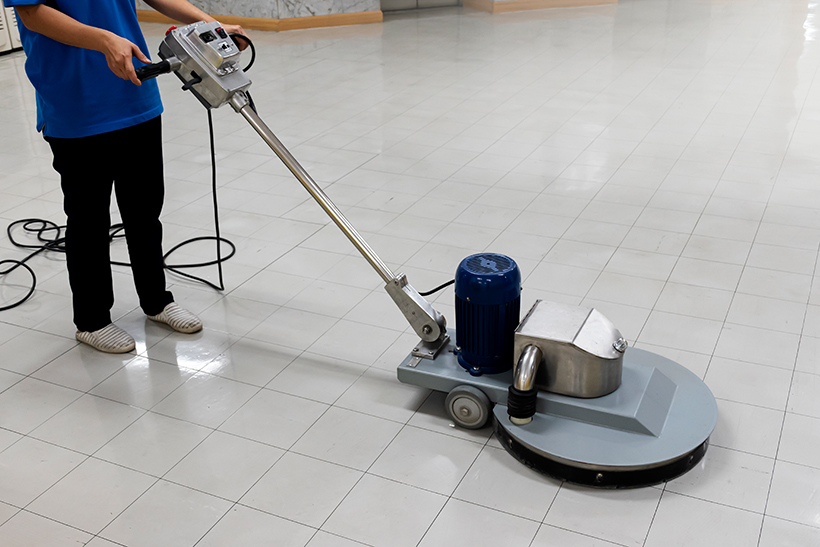
The KK Cleaning Professional 3-Phase Restoration Protocol
At KK Cleaning & Restoration, we resolve shower grout contamination through a proven scientific restoration system:
- Phase 1: 310°F Commercial Vapor Steam Extraction: Pressurized high-temperature dry steam emulsifies calcified soap scum and thermally neutralizes bacteria at the cellular level.
- Phase 2: Neutral-pH Biocidal Sanitization: Application of hospital-grade biocides specifically formulated to eliminate Serratia marcescens without eroding cement joints.
- Phase 3: Hydrophobic Fluoropolymer & Epoxy Sealing: We infuse joints with commercial penetrating sealers or waterproof epoxy color seals, creating an impermeable barrier that repels water and prevents future bacterial colonization. Explore our full range of professional tile and shower restoration services.
DIY Cleaning vs. KK Professional Shower Restoration
| Evaluation Metric | DIY Scrubbing & Bleach | KK Professional Restoration |
|---|---|---|
| Extraction Depth | Superficial top 0.5mm only | Full-depth thermal steam & biocidal extraction |
| Longevity of Clean | Discoloration returns in 7 to 14 days | Long-term protection backed by commercial sealants (1–3 years) |
| Grout Joint Integrity | Acid/bleach erosion causes pitting & leaks | Reinforces cement density with zero chemical erosion |
| Waterproofing Barrier | Unsealed, highly porous | Fluoropolymer/epoxy barrier prevents behind-wall leaks |
| Project Turnaround | Hours of exhausting repetitive scrubbing | Completed in 2 to 4 hours by certified technicians |
Get a Guaranteed Same-Day Quote for Your Shower
If persistent orange or pink stains are ruining your bathroom tiles, let the specialists at KK Cleaning & Restoration restore your surfaces to showroom condition at a fraction of demolition costs.
Learn more about our team, or request a free estimate today. Simply text or email 2 or 3 photos of your shower walls and floor to our dispatch team:
- 📞 Direct Line: +1 647 916 3093
- ✉️ Email: info@kkcleaningandrestoration.ca
- 📍 Service Area: Toronto, Scarborough, North York, Etobicoke, Mississauga, Vaughan, Markham, and communities within 150 KM.
- ⭐ Reputation: 4.6 Stars across 100+ verified customer reviews!